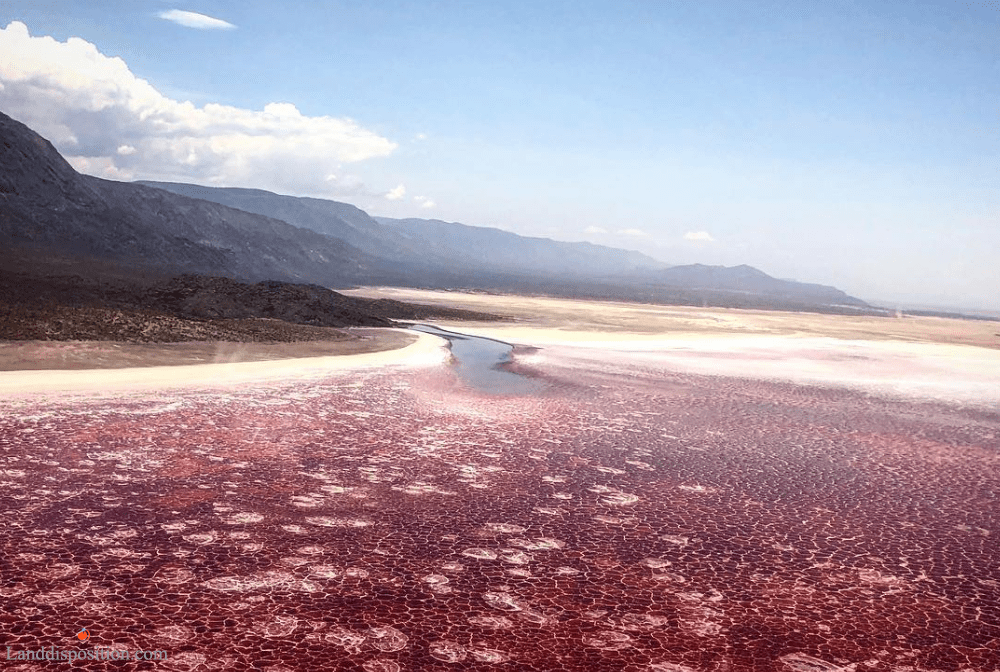
Lake Natron is a salt or soda lake in Arusha Region in Tanzania. It is in the Gregory Rift, which is the eastern branch of the East African Rift.The lake is within the Lake Natron Basin, a Ramsar Site wetland of international significance.
The lake is fed principally by the Southern Ewaso Ng’iro River, which rises in central Kenya,and by mineral-rich hot springs.It is quite shallow, less than three metres (9.8 ft) deep, and varies in width depending on its water level. The lake is a maximum of 57 kilometres (35 mi) long and 22 kilometres (14 mi) wide. The surrounding area receives irregular seasonal rainfall, mainly between December and May totalling 800 millimetres (31 in) per year.Temperatures at the lake are frequently above 40 °C (104 °F).
High levels of evaporation have left behind natron (sodium carbonate decahydrate) and trona (sodium sesquicarbonate dihydrate). The alkalinity of the lake can reach a pH of greater than 12. The surrounding bedrock is composed of sodium-dominated trachyte lavas that were laid down during the Pleistocene period. The lavas have significant amounts of carbonate but very low calcium and magnesium levels. This has allowed the lake to concentrate into a caustic alkaline brine.
Lake natron history
1. Lake natron fish
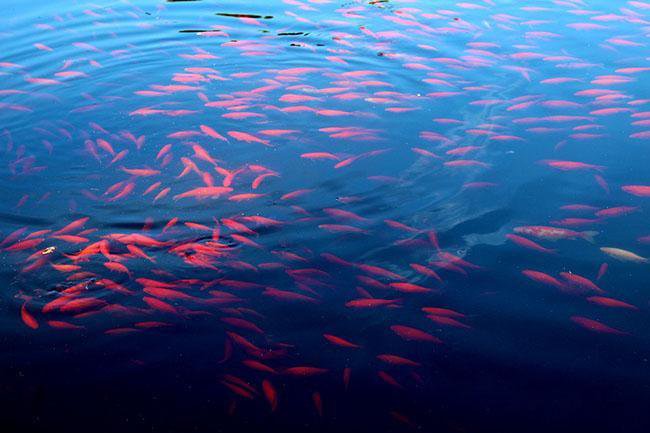
Lake Natron is a haven for ‘some’ aquatic species, algae, alkaline, tilapia fish.
This petite fish is about 10cm in measurement and lives on the harshness of the hot spring bays, where the water htemperature is between 36-40°C.
It is prevalent to the saline lakes of the valley and is used to fight the high temperature and salinity of the lakes in addition to the changes in circumstances due to rains.
2.What Makes the Lake Natron Red?

Even though the lake looks normal sometimes, however, after the temperature raises the bacteria present inside the pond exudes a red pigment, resulting in colouring the lake red.And since the bacteria still exist, this tedious landscape resonates the bizarre alien backdrop.During the hottest period, the intensity of sodium carbonate increases to a greater extent, making the lake viscid.The red colour it exudes is called spirulina; along with red colour, the lake also oozes blue and green algae.
The temperature here varies. The temperature here goes from mildly hot to hottest temperature, with 41’c, the significance of preserving the flamingos here is essential
3.Lake Natron flamingos
In the course of the breeding season, flamingos use the lake as their breeding ground.Though regardless of the harsh heat, flamingos can withstand such coarse climate.
You might have caught a glimpse of one of the haunting photos that circulated in 2013 by English

photographer Nick Brandt. In this series, calcified animals that washed up on Lake Natron’s shores were placed in lifelike positions, as they might have been in their living state.While he was still exploring the wildlife of Africa, he stumbled upon an astounding place. A natural lake with not so ‘normal’ landscape; the animals inside the lake were all turned into stone.
The lake’s unique ecology as a soda lake, its pristine natural state and its importance to many species of migratory birds makes it an exceptionally important environmental habitat with many functions in the natural ecosystems.

 Lake Natron
Great
LikeLiked by 1 person
Good one
LikeLiked by 1 person
Amazing blog! It helped me know so much about such a unique lake! Kudos✌🏻
LikeLiked by 1 person
Good one!
LikeLiked by 1 person
Good job nice info!
LikeLike
Good one 🤟
LikeLiked by 1 person
Good info..
LikeLike